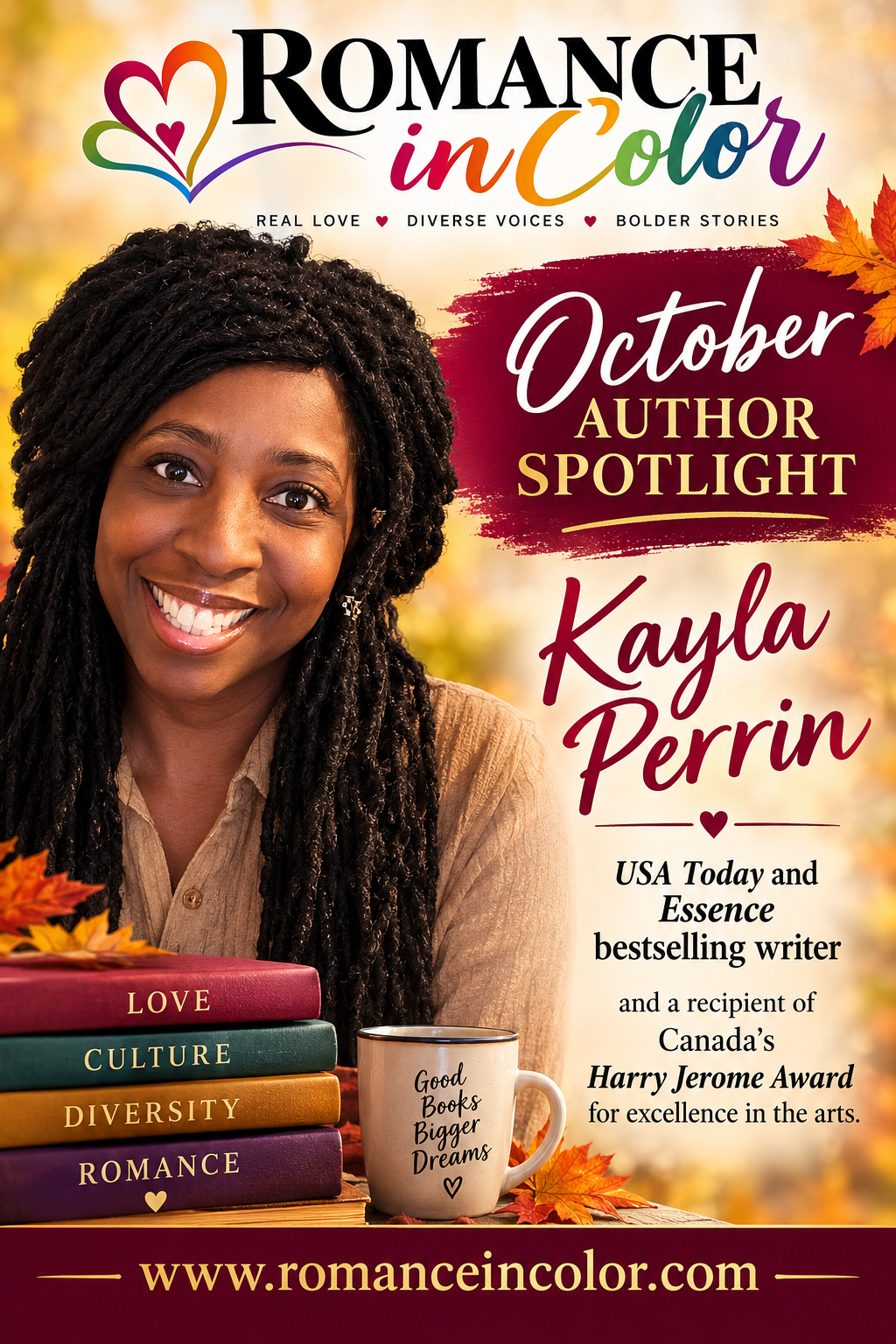
|
KAYLA'S FAVORITES THINGS
- Favorite Food:
Burritos - Favorite Movie:
The Shawshank Redemption - Favorite TV Show:
The Amazing Race - Favorite Author:
Sandra Brown. I especially love her twisty romantic suspense novels and the way she keeps you guessing. - Favorite Song:
Currently “You Give Me Something” by James Morrison - Favorite Book:
ENVY by Sandra Brown. The twist blew me away!
ABOUT THE AUTHOR
Describe a typical day for Kayla.
First and foremost, I need coffee. I’m a night owl, so I need coffee first thing to get the gears grinding in the morning. While I’m making it, there’s a good chance I’m also cooking something for myself and my daughter, who works from home. Potatoes will probably be involved. Maybe something Tex-Mex. I love to cook!
Once I’m caffeinated, I usually go back over what I wrote the day before. Years ago, I read a piece of advice from Spike Lee. He said to never end your writing day when the scene was finished. Stop in the middle of the scene so it’s easy to mentally jump right back in. I’ve never forgotten that. So, mornings tend to be about revising, rereading, and getting myself back into the story.
My writing habits have changed over the years. I used to spend all my writing time sitting at a desk. Now? Give me my laptop, my bed, and a pile of pillows. I’ll often have the television playing in the background, sometimes something fairly mindless, sometimes a crime show I can half-watch while I’m working. It makes writing feel less like work.
But every so often I’m reminded that I’m at my most productive when it’s just me, my laptop, music in my earbuds, and the story. In fact, you can occasionally spot Kayla Perrin in the wild with a laptop at a car dealership, an airport, or even a hospital ER, fingers flying. Put me somewhere I can’t be distracted by everything I should be doing around the house, and apparently, I can write anywhere.
Life inevitably takes over during the day: errands, household things, phone calls, family. Then, around ten at night, something happens. My creative brain wakes up again. That’s when I’m most likely to stop revising and start creating something new, and I can easily keep going until one in the morning if the story has me.
So that’s probably the simplest description of my typical writing day: morning is revision; nighttime is creation. Everything else finds its way into the spaces in between.
What do you enjoy most about being a writer?
I’ve been a storyteller since before I could hold a pencil. My aunt in Jamaica once told me that when I was very little, someone had a tape recorder running and I announced, “Let me tell you a story.” That recording is long gone, unfortunately, and I would honestly give anything to hear it now. What story did little Kayla have to tell? I wish I knew. But I love knowing that even then, before I could really write, apparently, I already needed to tell stories.
I didn’t even know people got paid to write books until I was about thirteen. That was a revelation. You mean this thing I already loved doing could actually be my job?
So, part of what I love most about being a writer is simply that I did it. I became the thing I dreamed of becoming. I started in an era when becoming a published novelist meant printing out a manuscript, putting it in the mail, sending it to a publisher and waiting. And waiting. You went to conferences, submitted your work, faced rejection, kept learning your craft, and hoped eventually someone would believe in your stories as much as you did. I dreamed about doing this, and I’ve now had the privilege of telling stories professionally for more than twenty-five years.
I also love that the ideas have never stopped coming. I see stories everywhere. I see characters in people. I overhear conversations and immediately start wondering about the story behind them. The most dangerous thing you can do around a novelist is have an interesting conversation within earshot, because I will clock it and probably put something in a notebook for future reference. I was sitting in a hospital ER recently, listening to the triage nurse, and before I knew it, part of my brain was constructing a story.
But I think what I love most is discovering that something I wrote can actually matter to someone else.
Years ago, I received a letter from a young woman who had read The Delta Sisters. She told me that after reading the book, she found the courage to go home and face her mother after fifteen years. I’ve never forgotten that. As writers, we sit alone and make up people who don’t exist and conversations that never happened. Then the book goes out into the world, and somewhere, someone laughs, cries, sees herself differently, or finds courage she didn’t have before.
That’s the extraordinary part for me. I get to do something I’ve apparently wanted to do for as long as I’ve been able to talk, and every once in a while, one of those stories reaches somebody in a way I never could have imagined.
What, to you, is the most difficult part of the writing process?
Ironically, one of the best things about being a writer is also one of the hardest: the flexibility.
When you don’t have a traditional nine-to-five job, people sometimes assume that means you’re available. You’re the person who can take the phone call, run the errand, help with something, listen to a friend’s latest drama or handle the “Can you just...?” request because, theoretically, you have the time.
Except you’re working.
And even without other people interrupting you, it’s remarkably easy to distract yourself. When you’re responsible for your own schedule, nobody is standing there telling you that you have to sit down and write. A whole day can disappear while you’re doing a hundred things that needed doing, except the one thing you intended to do.
I’ve always worked extremely well with deadlines. Give me a deadline breathing down my neck and suddenly everything becomes very clear: this has to get done. I’ve been that way since college. When I know something absolutely has to be finished, I finish it.
Without that external deadline, you have to create that discipline for yourself. You have to protect the time and remind yourself that writing isn’t what you get to do after you’ve taken care of everybody and everything else. It is the job.
So, for me, the hardest part isn’t coming up with ideas. I have more ideas than I could probably write in a lifetime. It’s protecting the time to actually sit down and turn those ideas into books.
Of the genres you have written in, which is your favorite?
Romantic suspense, hands down. Because I can always throw a dead body in there!
Apparently, the signs were there early. When I was in fifth grade, my teacher told my parents that I had a “morbid sense of creativity.” I don’t remember the story I’d written, but I remember one line very clearly: “And the bloody eyeball rolled along the floor.”
So perhaps romantic suspense was inevitable.
I love writing romance, but I’ve discovered over the years that I’m happiest when there’s something else driving the story alongside the relationship: danger, a crime, a secret, a mystery, something from the past coming back that the characters would much rather have left buried. There’s a reason I’ll happily have a crime show playing in the background while I’m writing.
Even when I’ve written women’s fiction, such as The Delta Sisters, I’ve found myself drawn to darker elements and secrets. The same is true of books like We’ll Never Tell, and certainly my romantic suspense stories. I love taking characters who are already dealing with complicated emotions and then putting them into circumstances that force them to confront things about themselves and each other.
That’s probably the common thread through much of my writing, regardless of genre. I’m fascinated by people at pivotal moments in their lives, when something has happened that means they can’t simply go back to who they were before.
Add a love story, some danger, a secret or two, and possibly a dead body, and I’m very happy.
What do you enjoy doing when you are not writing?
Cooking, definitely. I love to cook. I’ve discovered that the kitchen gives me another outlet for my creativity, and at the same time it lets my brain step away from writing for a while. I’m vegan, and I love taking foods I’ve enjoyed in the past and figuring out how to veganize them without sacrificing the flavors that made me love them in the first place.
And I experiment. I’ve made everything from my own vegan versions of favorite dishes to dandelion “honey,” turning actual dandelion flowers into this beautiful amber syrup that tastes remarkably like honey. Give me an interesting ingredient and there’s a good chance I’ll start wondering, “What can I do with this?”
Of course, somehow even cooking turned into another creative project. I have a vegan channel, and whenever I make something new, I tend to film it. I’ve posted hundreds of food videos over the years, although I currently have an embarrassing backlog of videos waiting to be edited and posted. Apparently cooking the food is much more exciting than dealing with my editing queue!
That also connects to another thing I love: video and film editing. I’ve always enjoyed taking images, music, sound and story and putting them together, whether it’s a food video, a book trailer or a larger film project. I’m even getting back to a film I shot about ten years ago that was never completed after some of the audio was lost. I’ve decided it’s finally time to see whether I can bring it back to life.
So apparently even when I’m not writing, I still find ways to create.
What is the best book you have read so far in 2026?
THE LOVE HYPOTHESIS by Ali Hazelwood. I’m late to the party on this one, but I really enjoyed it. I’m a sucker for a well-done fake-dating story, and this one reminded me why the trope can be so much fun.
ALL ABOUT THE BOOKS
Tell us a little about HER UNDERCOVER PROTECTOR and HER BODYGUARD, the first two books in the Steel Protection Services Series. Will there be more books in the series?
Readers actually got their first glimpse of Steel Protection Services a few years ago in my Harlequin Intrigue, COLD CASE SUSPECT. That book follows Shayla Phillips, who returns to the hometown she fled years earlier and finds herself drawn back into an unsolved crime from her past. Griffin Woodward appeared as a secondary character, one of the investigators with Steel Protection Services, and I knew there was more story to tell in that world.
That eventually led to HER UNDERCOVER PROTECTOR.
Dahlia Mondale has just taken over as CEO of Mondale Enterprises following the death of her father, a death authorities have ruled a suicide. Dahlia doesn’t believe it. She is convinced her father was murdered, and she’s determined to find out why.
Enter Griffin Woodward, a former Navy SEAL who goes undercover inside Mondale Enterprises, posing as Dahlia’s assistant while secretly working to uncover the truth and protect her. Of course, putting the two of them together every day creates another complication neither one planned for: they’re falling for each other.
But Dahlia is carrying trauma from a previous attack, and as Griffin investigates her father’s death, it becomes increasingly clear that the danger surrounding her may be much bigger than either of them realized.
HER UNDERCOVER PROTECTOR was originally going to be released earlier, but while we were working on it, my editor saw an opportunity to do something a little different. Rather than end Dahlia and Griffin’s story with one book, she wanted to continue their relationship and the larger suspense story into a second novel, with the two books released back-to-back.
That meant Her Undercover Protector had to wait while I developed and wrote Her Bodyguard, but creatively, I loved the opportunity. Romance readers usually meet a couple, watch them fall in love and say goodbye at the end of the book. Here, I got to ask: What happens next? HER UNDERCOVER PROTECTOR resolves important questions, but Dahlia and Griffin’s story isn’t over. I had the unusual opportunity to follow the same couple into a second romantic suspense novel, exploring what happens after that first stage of falling in love while also deepening the suspense around Dahlia.
So, HER BODYGUARD picks up with Dahlia and Griffin together. They’ve escaped to the Virgin Islands for a romantic getaway and finally have a chance to breathe, enjoy each other and explore this new relationship.
Then they come home.
Dahlia’s best friend has been brutally murdered in Dahlia’s house, and Dahlia and Griffin immediately fear the same thing: she may have been the intended victim. Suddenly the threat they thought they understood has become something far more terrifying, and Griffin isn’t protecting a client anymore. He’s protecting the woman he loves.
As for whether there will be more Steel Protection Services books: I certainly hope so. Griffin isn’t the only person working at Steel Protection Services, and I’ve created a world with plenty of room for more protectors, more danger and, knowing me, probably a few more dead bodies.
If you had to recommend a book that best embodies you as the author, which of your books would it be?
That’s such a difficult question after writing so many books, but I keep coming back to THE DELTA SISTERS.
It was one of the hardest books I’ve ever written, and ultimately one of the books I love most. It follows three generations of mothers and daughters and a secret from the past that comes back decades later to affect all of them. It allowed me to explore so many of the things that fascinate me as a writer: complicated family relationships, the things people keep from one another, the consequences of choices made years earlier, and what happens when the past refuses to stay buried.
I’ve written romance, romantic suspense, women’s fiction and straight suspense, and there are books in every one of those genres that I love. But THE DELTA SISTERS probably captures the common thread running through much of my work: emotionally complicated people, secrets, relationships under pressure, and characters being forced to confront truths they’d rather avoid.
Years ago, someone I worked with on a film set bought a copy from me. The next time she saw me, she came marching toward me and said, “I read your book. This should be a movie.” Then she added, “Now I see how your mind works.”
I think she may have answered this question for me.
What qualities or characteristics do you believe make your books special?
Give me messy, complicated relationships and I’m happy.
I think one of the qualities that defines my books is my fascination with relationships and what happens to them when you add secrets, conflict and history. Sisters who don’t get along. Mothers and daughters who love each other but can’t seem to understand each other. Families who have spent years carefully avoiding the one subject everyone knows they’re not supposed to discuss. People who have made choices they thought they could bury, only to discover years later that those choices have consequences.
I love secrets, particularly because a secret is rarely interesting to me simply because of the information being hidden. What fascinates me is what keeping that secret does to people.
The Delta Sisters is a great example. I was writing about three generations of women, including a grandmother who came of age in 1950s New Orleans with very traditional ideas about keeping family business private at all costs. The choices she made and the secrets she kept didn’t end with her. They affected her daughter, and ultimately her granddaughter. That’s the kind of emotional domino effect I love exploring.
Even when I’m writing romantic suspense and there’s an external danger driving the plot, I’m still interested in what’s happening inside relationships. What aren’t these people saying to each other? What happened years ago that still influences how they behave today? What happens when the truth finally comes out?
That’s probably my flavor as a writer: secrets, messy relationships, complicated families and people trying to figure out how on earth they’re going to get themselves out of the situations they’ve created.
What is next for Kayla?
A lot, actually! I’m balancing my traditionally published work with several projects of my own, and one I’m especially excited about is my Island Heat romantic suspense series.
The prequel, The Night I Met Zane, is already available, and I’m currently deep in revisions on the first full-length novel. I’ve also written portions of later books in the series because apparently my characters don’t always believe in waiting their turn. It’s an interconnected romantic suspense world with an overarching story that develops across the series, and I’m excited to finally start bringing more of it to readers.
I’m also returning to another longtime love of mine: film. I’ve worked in film and television over the years, but I’ve always wanted to make a movie of my own. I’m currently working on a screenplay and exploring what it would take to produce the film independently.
It’s something I’ve wanted to do for a very long time, and I’ve reached the point where I’m less interested in saying, “One day I’d love to make a movie,” and much more interested in figuring out how to make that day happen.
So, what’s next for me? More books, more suspense, and, if everything goes according to plan, finally putting one of my own stories on the screen.
ABOUT THE READERS
If there was one thing you could tell your readers about Kayla, what would it be?
She’s not done.
There were years when life took me away from publishing more than I ever expected it would. I spent time working in film and television, dealt with some difficult things in my personal life, and there were periods when my books simply weren’t coming out with the regularity they once did.
One of the things I’ve sometimes worried about is whether the readers who had been with me for years thought I’d forgotten about them.
I haven’t. I never did.
In fact, when one of the later books in my AGE OF LOVE series took much longer to release than I’d intended, I ultimately gave it to my readers for free because I felt so badly that they’d waited so long.
So, if there’s one thing I’d want longtime readers to know, it’s that I’m still here. I’m writing. I’m creating. I’m excited about stories again, and I’m ready to focus on bringing more of them into the world.
Kayla Perrin isn’t done. Not even close.
What advice would you give to an aspiring author?
Learn your craft.
The publishing world has changed enormously since I began writing, and today there are more tools and more ways to produce a book than ever before. But nothing replaces understanding how a story works.
I used to teach a writing workshop, and I would begin by giving everyone in the room exactly the same situation: A woman is leaving her house in the middle of the night.
Then we’d start asking questions. Who is she? Why is she leaving? Where is she going? Is she running from someone? Running toward someone? Is she frightened? Excited? Is she doing something she’s not supposed to be doing?
Every person in the room could take that same sentence and create a completely different story. Someone might turn it into suspense. Someone else might make it romantic. Another writer could make it funny. Maybe she’s sneaking out because she just learned her favorite band is coming to town and she’s determined to be first in line for tickets.
That’s the creative muscle I think writers need to develop. A character can have interesting qualities, but interesting qualities alone aren’t a story. Put that character into a situation. Give her something she wants or needs. Give her a reason she can’t easily get it. Then start asking questions.
Read constantly. Study the books that make you feel something and ask yourself why they work. Learn character, conflict, motivation, pacing and structure. And exercise your imagination until asking “What if?” becomes second nature.
Most importantly, write. You can study writing forever, but eventually you have to put words on the page. Your first attempt may not be brilliant. That’s okay.
Craft isn’t something you learn once and possess forever. I’ve been doing this professionally for more than twenty-five years, and I’m still learning. That’s part of what makes writing so rewarding.
How can readers reach you?
- Email: KaylaPerrinContact@gmail.com
- Website: www.AuthorKaylaPerrin.com
- Facebook: https://www.facebook.com/authorkayla.perrin/
- Instagram: @AuthorKaylaPerrin
- TikTok: @AuthorKaylaPerrin
